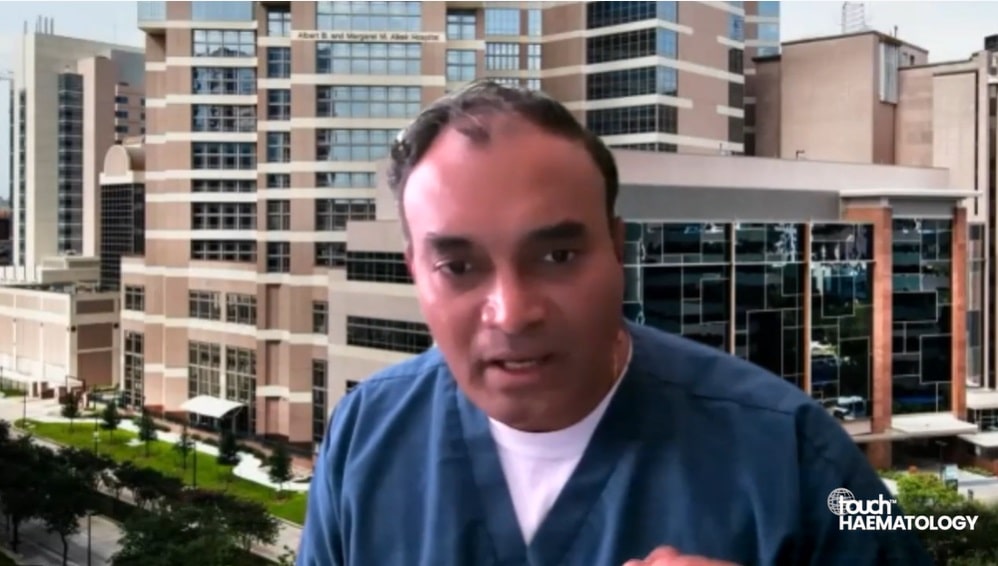
At the 67th ASH Annual Meeting and Exposition (ASH25), the lymphoma research landscape reflected both the ongoing challenges in frontline therapy for older and frail patients, and emerging opportunities with immunotherapeutic approaches. Investigators presented a series of trials exploring chemolight regimens, bispecific antibodies and novel single-agent strategies aimed at expanding options beyond conventional cytotoxic chemotherapy. Below, Dr Tycel Phillips (City of Hope Cancer Center Duarte, CA, USA) breaks down five of the major abstracts from ASH25, highlighting their take-aways and considering their potential relevance for clinical practice.

“A central theme across ASH 2025 in the lymphoma space was optimizing personalized therapies. The emphasis is moving from one-size-fits-all therapy to combination therapies and tailored treatment strategies for patients unable to tolerate full-dose chemotherapy.”
In older or medically unfit patients with newly diagnosed aggressive B-cell lymphoma, the Phase II R-Pola-Glo trial reported encouraging activity with a chemotherapy-light combination of rituximab, polatuzumab vedotin, and glofitamab. This regimen was designed for patients for whom full-dose anthracycline-based therapy is unsuitable. Early results showed that response rates remained high across treatment cycles, with a substantial proportion of patients achieving complete metabolic responses during consolidation. Overall, treatment adherence was strong in this cohort, highlighting the potential of antibody-based combinations in frail populations who traditionally tolerate few options well. These data support further evaluation of less intensive strategies in patients where standard regimens pose substantial risk.
Another strategy to simplify frontline treatment in unfit patients was presented in the MorningSun study, which evaluated fixed-duration subcutaneous mosunetuzumab monotherapy. Interim results suggest a level of efficacy and a tolerable safety profile in elderly patients who were ineligible for standard chemoimmunotherapy. While longer follow-up is needed to fully define durability and comparative benefit, these findings contribute to the broader discussion around minimizing chemotherapy exposure in select patients. Fixed-duration subcutaneous mosunetuzumab may represent a practical option with manageable safety for a difficult-to-treat population.
Emerging data from EPCORE DLBCL-3 described epcoritamab monotherapy in newly diagnosed large B-cell lymphoma among anthracycline-ineligible patients. Although not directly compared with standard approaches, such bispecific antibody monotherapy highlights a growing interest in T-cell engaging therapies as potential alternatives where conventional chemotherapy carries high risk.
In follicular lymphoma (FL), the randomized Phase III EPCORE FL-1 trial of epcoritamab added to rituximab and lenalidomide (R²) versus R² alone marked one of the more definitive controlled studies presented. Interim results showed improvements in response rates and progression-free survival with the triplet combination across pre-specified subgroups. Safety findings were consistent with known profiles for bispecifics and R², with cytokine release events largely low-grade. These data support the regimen’s activity in relapsed/refractory FL and underscore the growing role of bispecific antibodies in earlier lines of therapy.
Beyond this, investigators also highlighted bispecific combinations in first-line FL, such as rituximab plus epcoritamab, reporting high efficacy with a safety profile conducive to outpatient delivery — a notable consideration for community practice settings.
Updated 3-year results from the EPCORE NHL-2 cohort evaluating fixed-duration epcoritamab plus R-CHOP in newly diagnosed DLBCL with high International Prognostic Index (IPI) scores (3–5) showed sustained remissions in a population typically at increased risk of relapse. Among 47 treated patients, the overall response rate reached 98%, with complete responses in 85%, and most remissions remained ongoing beyond 33 months of follow-up. MRD negativity was achieved early in treatment and maintained across high-risk subgroups, including patients with bulky disease or IPI 4–5. Safety remained consistent with earlier reports, with most infections occurring in the first six months and no new grade 5 events. Although further validation is required in randomized settings, these long-term outcomes suggest that adding a CD3×CD20 bispecific antibody to standard immunochemotherapy may offer a durable disease-control strategy for selected high-risk patients.
ASH25 reaffirmed the expanding landscape of immunotherapy in lymphoma, particularly for patients who may not tolerate standard chemotherapy. Bispecific antibodies — whether combined with existing backbones or used as monotherapy — continue to generate interest for both DLBCL and FL. While longer follow-up and randomized comparisons are needed to position these approaches relative to established standards, the breadth of data presented highlights a continued effort to tailor treatment intensity to patient fitness without compromising activity.
Disclosure: Tycel Philips is a consultant for Abbvie, Astra Zeneca, Xencor, Caribou , Genentech, Incyte, Gilead/KITE, Janssen (trial design), Pfizer (advise on clinical trial data and future design), Ipsen (advise on clinical trial data and future design), BMS (advise on clinical trial data and future design) and Johnson and Johnson. He has received grant/research support from Abbvie, Genentech and Sobi. He is a member of the Advisory Board for Abbvie, Celgene/BMS, Eli Lily, Beigene, ADCT, Seattle Genetics/Pfizer, Merck (advises on clinical trial results and future), Genmab, Genentech and Pharmacyclics.
Cite: Lymphoma at ASH25: Top 5 abstracts. December 12th, 2025
 Related content
- Inside ASH25: Breakthroughs redefining transplantation and cell therapy
- CAR-T therapy: A new era for lymphoma
- ASH25: Top abstracts in non-malignant haematology
SIGN UP to touchHAEMATOLOGY!
Join our global community today for access to thousands of peer-reviewed articles, expert insights, and learn-on-the-go education across 150+ specialties, plus concise email updates and newsletters so you never miss out.