This website is intended for healthcare professionals only

Trending Topic

Acute myeloid leukaemia
3 mins

Trending Topic

Developed by Touch
Mark CompleteCompleted
BookmarkBookmarked

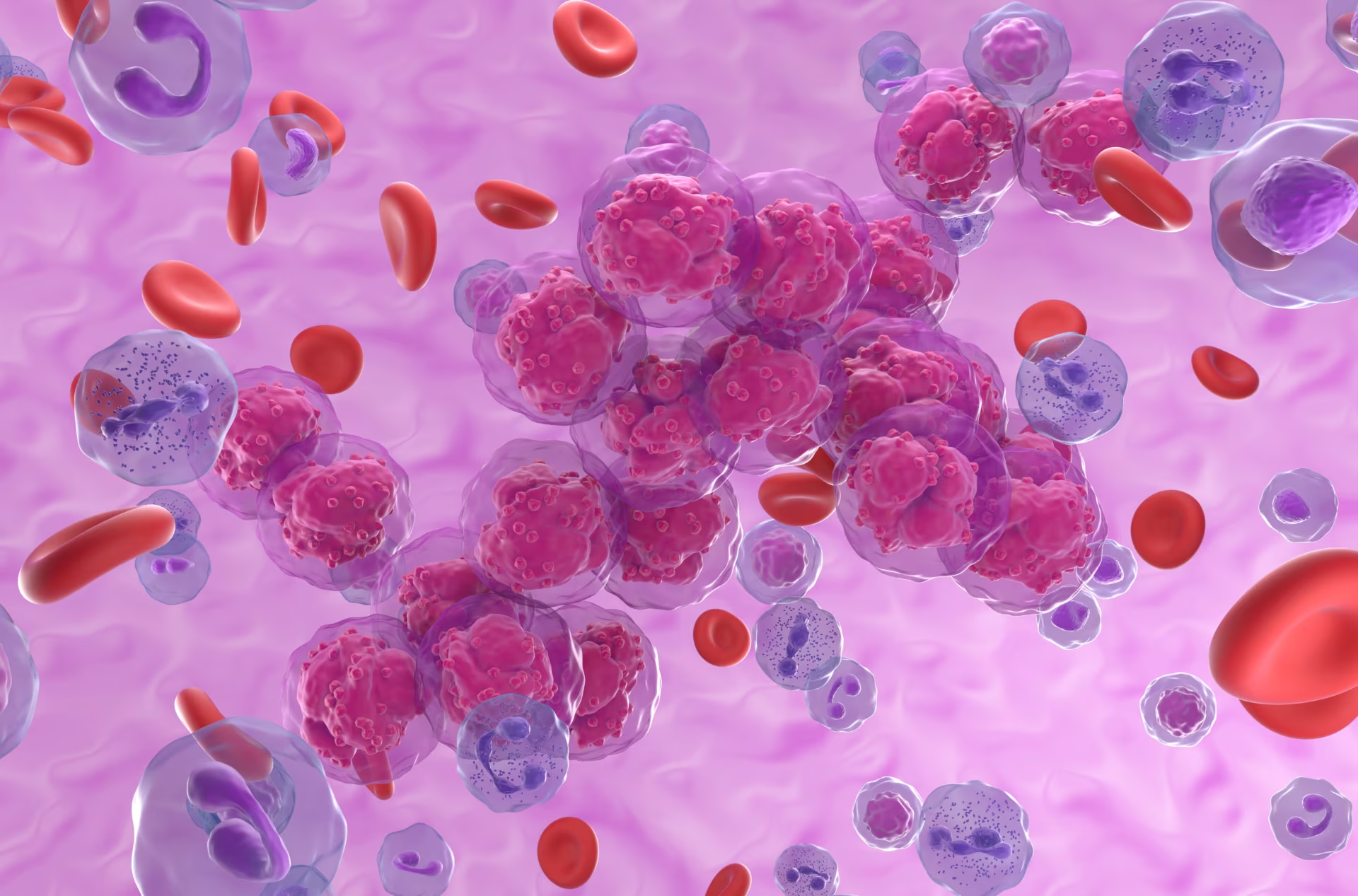
“We are facing an exciting era of fast-paced drug development in acute myeloid leukaemia” writes Gianfranco Bittar and colleagues at Baylor College of Medicine, Houston, TX, USA, in a review published in touchREVIEWS in Oncology & Haematology. In 2020, there were an estimated 21,450 new patients with acute myeloid leukaemia (AML) and 11,180 AML-related deaths […]

A year in review: Expert voices on the developments that defined 2025

4 mins
Share
Facebook
X (formerly Twitter)
LinkedIn
Via Email
Mark CompleteCompleted
BookmarkBookmarked
Copy LinkLink Copied
Published Online: Dec 16th 2025

2025 has brought exciting developments in haematology, with groundbreaking research and real-world progress showcased at EHA, ASH, EBMT and many more leading conferences around the world. We asked our key faculty to share what they believe has been most impactful so far this year – here’s what they told us.

Haematology nursing

In 2025, haematology nurses are working in an environment of rapid clinical innovation alongside increasing service pressures and workforce shortages. The growing use of complex therapies such as CAR T-cell, gene therapy and bispecific therapies has a direct impact on everyday nursing practice, requiring advanced knowledge, vigilance and confidence in managing patients across the treatment pathway. While significant progress has been made, there is still more research to be done to fully understand long-term outcomes and optimize supportive care. The Haematology Nurses & Healthcare Professionals Group (HNHCP) investment in two learning programmes in 2025 reflects a clear recognition that high-quality patient care depends on well-prepared nurses. As haematology continues to advance, ongoing investment in education is essential to support nurses, strengthen practice and ensure patients benefit safely and consistently from new therapies.

Erik Aerts
University Hospital Zürich, Zürich, Switzerland
President, Haematology Nurses & Healthcare Professionals Group (HNHCP)
Lymphoma

2025 was a pivotal year in lymphoma. Several T-cell directed therapies have been established in relapsed/refractory lymphoma. All of the approval to date are in the third-line setting or later. Similar to how monoclonal antibodies improved responses and survival in numerous lymphoma subtypes, we all hope that that the bispecific antibodies will deliver similar benefits to patients affected with lymphoma. The promise is no more exemplified in follicular lymphoma. Within the span of a calendar year, we had two new approvals in second-line follicular lymphoma. The inMIND study, which evaluated the addition of the CD19 monoclonal antibody, tafasitamab, to the previously approved combination of lenalidomide and rituximab. At this recent ASH 2025 meeting, data was presented which has supported another approval in this space. The EPCORE FL-1 trial, randomized patients to R2 vs. epcoritamab-R2. This study indicated that the addition of the CD20/C3 bispecific antibody, epcoritamab, to rituximab and lenalidomide could potentially establish a new standard given the dramatic improvement in remission duration as compared to the R2 regimen.

Dr Tycel Phillips
City of Hope Cancer Center Duarte, CA, USA
Myelodysplastic syndromes

In the realm of myeloid malignancies and germline predisposition, 2025 has set a watershed thanks to the release of new indications to allotransplant for myelodysplastic syndromes (MDS) by the European Group for Blood and Marrow Transplantation (EBMT). Such update has been eagerly awaited by the entire hematological community as MDS are now well defined from a molecular standpoint and thus indication for the only curative approach to it should follow accordingly molecular-based classifiers and scores. Speaking about scores and treatment indications, a very recent study released the very first risk assessment tool for an inherited leukemia syndrome, namely DDX41-mutant MDS/AML. This is a milestone as no other familial leukemia has a dedicated risk score tool and this represents a huge advancement in the field.
 Dr Carmelo Gurnari
Cleveland Clinic, Cleveland, OH, USA
University of Tor Vergata, Rome, Italy

Myeloproliferative neoplasms

The myeloproliferative neoplasms (MPN) research field continues to develop deeper understanding of disease biology revealing new therapeutic targets such as MEIS1 and with refined appreciation of clinical and biological outcomes of selective targeting of mutant CALR. The MPN community needs to validate biomarkers of disease modification as we aim to evaluate novel agents and combination therapies for the next generation of drug approvals.
Dr John Mascarenas
Icahn School of Medicine at Mount Sinai, New York City, NY, USA
Multiple myeloma, chronic lymphocytic leukemia and small lymphocytic lymphoma

Teclistamab–daratumumab has redefined early-relapse multiple myeloma care with unprecedented response depth, progression-free survival and trend for overall survival, while pirtobrutinib marks a new era in frontline CLL/SLL therapy, outperforming chemoimmunotherapy in both efficacy and tolerability.
Prof Meletios-Athanasios Dimopoulos
National and Kapodistrian University of Athens, Athens, Greece

Cite: A year in review: Expert voices on the developments that defined 2025. touchHAEMATOLOGY. 16th December 2025.

Editor: Sophie Nickelson


Related content


SIGN UP to touchHAEMATOLOGY!

Join our global community today for access to thousands of peer-reviewed articles, expert insights and learn-on-the-go education across 150+ specialties, plus concise email updates and newsletters so you never miss out.

Share
Facebook
X (formerly Twitter)
LinkedIn
Via Email
Mark CompleteCompleted
BookmarkBookmarked
Copy LinkLink Copied
Close Popup