touchHAEMATOLOGY Future Leaders 2026
Following the successful introduction of touchHAEMATOLOGY Future Leaders 2025, we are delighted to announce that nominations are now open for the 2026 shortlist.
This initiative celebrates the next generation of haematology pioneers – those whose passion, dedication and innovative thinking are shaping the future of malignant and non-malignant haematology care. By highlighting the rising stars of today, we aim to showcase the individuals who are set to drive progress and transformation in the years ahead.
We invite our global haematology community to put forward colleagues, peers or mentors who demonstrate exceptional promise, leadership and vision. Nominations are open across all subspecialties, malignant and non-malignant, reflecting the breadth and diversity of talent that continues to advance the field.
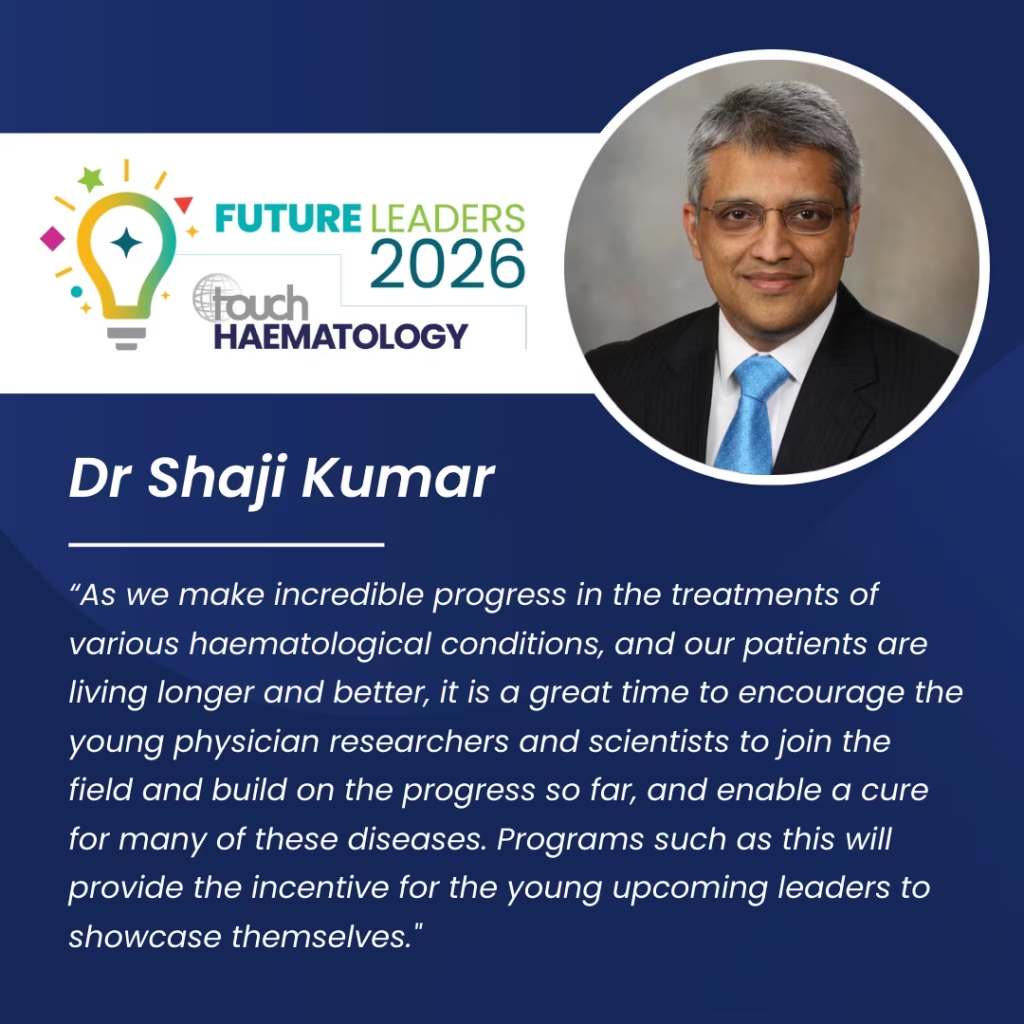
Why nominate a rising star?
Haematologists selected as Future Leaders 2026 will enjoy the following benefits:
- Enhanced professional visibility through our Future Leaders 2026 campaign, promoted to our extensive network of haematologists and industry professionals
- Official recognition with a Future Leader 2026 certification and LinkedIn badge
- Exclusive opportunities to contribute to expert-led content, including live events, thought-leadership features and conference coverage on our global platform
Criteria for nominees
touchHAEMATOLOGY Future Leaders 2026 recognizes outstanding rising talents in the field of malignant and non-malignant haematology across the globe. To be eligible for nomination, candidates must meet the following criteria:
- Age requirement – Candidates must be ≤40 years of age at the time of nomination. An extension of up to 4 years may be applied in recognition of career interruptions, including but not limited to illness, parental leave or significant caregiving responsibilities.
- Academic contribution – Candidates must have at least one publication as first, corresponding or last author in a PubMed-indexed or Q1-ranked journal (Clarivate JCR 2024).
- Career stage – Candidates may be at any career level, from trainee to senior lecturer/associate professor. Full professor titles are not eligible.
- Field of work – Candidates must be actively engaged in clinical practice, research or education in their field.
- Professional standing – Candidates should demonstrate evidence of leadership potential, innovation or meaningful contributions to their subspecialty or the wider specialty community. Engagement in international conferences and medical society committees is considered highly desirable.