New phase 3 data from the AIEOP-BFM ALL 2017 trial presented at EHA 2026 show one of the clearest demonstrations to date that frontline immunotherapy can outperform and out-safeguard conventional chemotherapy in pediatric ALL

“We are not just adding something new; we are removing something toxic and replacing it with something more effective. The next question is how much further we can reduce chemotherapy. These data are so clear in terms of relapse reduction and toxicity reduction that there is really no alternative.”
touchHEMATOLOGY coverage from EHA 2026
New data from the phase 3 AIEOP-BFM ALL 2017 trial presented at the European Hematology Association (EHA) 2026 Congress suggest that intensive chemotherapy can be safely reduced in newly diagnosed pediatric high-risk B-cell acute lymphoblastic leukemia (B-ALL) by replacing two of the most toxic treatment blocks with Blinatumomab.
The trial randomized 709 children after induction, consolidation, and one intensive chemotherapy block (HR-1) to receive either two 28-day cycles of blinatumomab (n=358) or standard high-dose chemotherapy (n=351). At interim analysis, the study met its primary endpoint, with 4-year event-free survival (EFS) of 83.0% (SE 2.5%) in the blinatumomab arm versus 70.3% (SE 3.1%) in the chemotherapy arm (p=0.0002; HR 0.51, 95% CI 0.35–0.73).
Blinatumomab also reduced relapse incidence (11.8% vs 21.4%) and improved MRD clearance in pre-randomization MRD-positive patients (76.9% vs 45.8%; p<0.0001). Toxicity was substantially lower, with fewer infections, less mucositis, and fewer life-threatening adverse events. Together, the findings support immunotherapy not simply as an additive strategy, but as a replacement for highly intensive chemotherapy in frontline high-risk pediatric B-ALL.
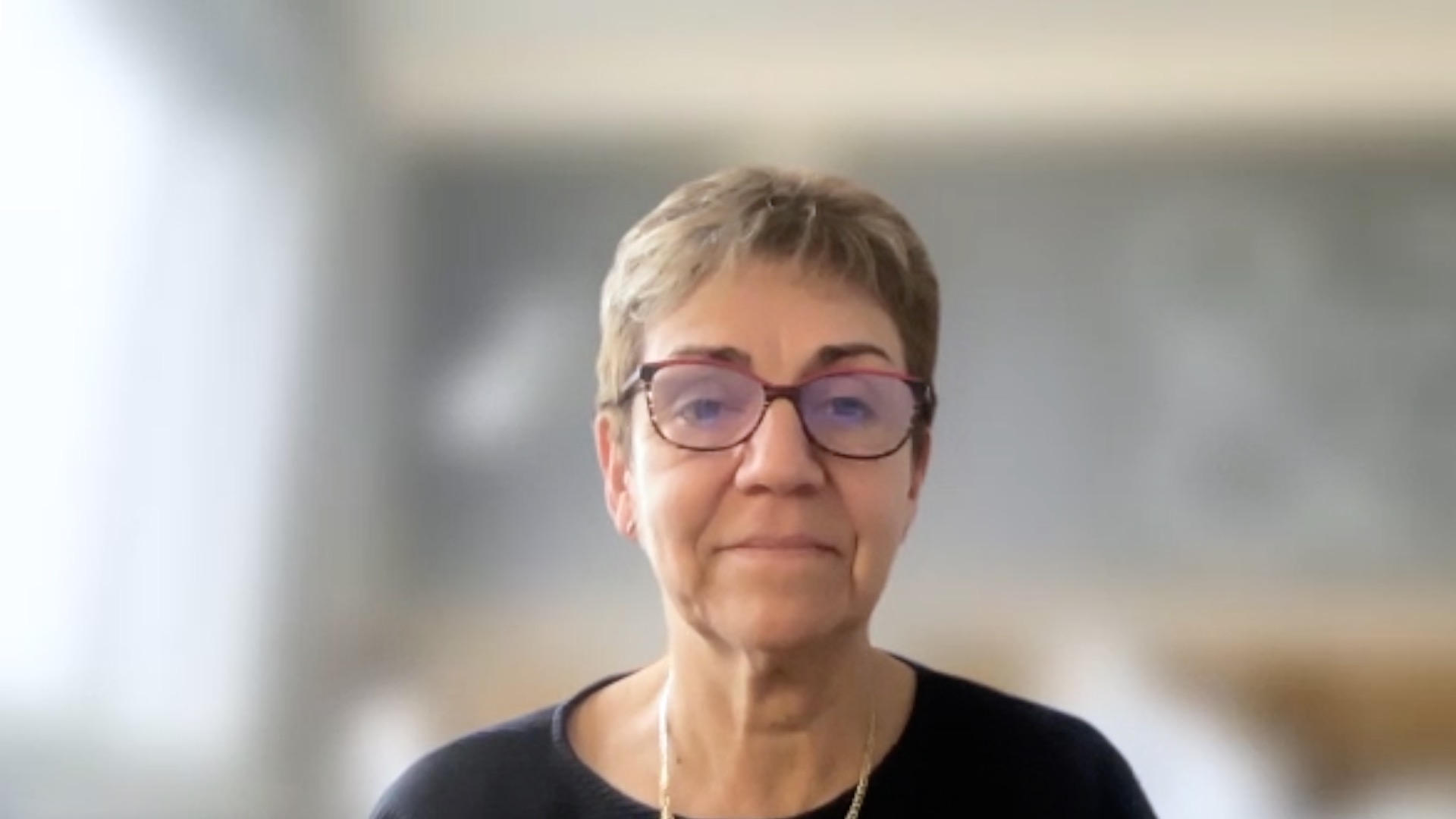
Speaking after the presentation, Prof Martin Schrappe (University Medical Center Schleswig-Holstein, Christian-Albrechts-University of Kiel, Germany) suggested this may be only the beginning of chemotherapy de-escalation in childhood ALL.
Abstract EHA-3803: Schrappe M, Locatelli F, Valsecchi MG, et al. REPLACEMENT OF HIGH DOSE COMBINATION CHEMOTHERAPY WITH BLINATUMOMAB IN NEWLY DIAGNOSED PEDIATRIC HIGH-RISK B-CELL ALL IMPROVES EFFICACY AND SAFETY IN THE RANDOMIZED PHASE 3 AIEOP-BFM ALL 2017 TRIAL. Presented at: EHA 2026, Stockholm, Sweden. June 11–14th, 2026.
Do these data establish blinatumomab as a new frontline standard of care in high-risk pediatric B-ALL?
Yes, I am absolutely convinced. These data are very clear, not only in terms of relapse reduction, but also in reducing toxicity. There is really no alternative now; we have to move in this direction in the future. The next question is whether we can reduce chemotherapy even further, or whether this is already the limit. I do not think it is the limit.
Which efficacy endpoint or signal do you consider the most practice-changing in these results?
That is difficult to answer, because both are equally important. The reduction in relapses is clearly important, especially because high-risk patients are often difficult to retreat after relapse. But the reduction in toxicity is also highly relevant. From the patient perspective, this may even be more important, because it directly affects what they experience: less mucositis, fewer infections, less fever. It is the combination of both that makes these results so important.
Do these results support further chemotherapy de-escalation in frontline pediatric ALL? What are the next steps?
Yes, absolutely. On September 1 this year, we will open a large phase 3 study directly addressing this question in low-risk ALL. There, we aim to dramatically reduce chemotherapy, by more than 50%, and in some cases by up to 90%, by replacing it with immunotherapy. We are not simply testing a drug; we are testing two treatment concepts. This may be even more exciting than the study presented today because it could move much of treatment into the outpatient setting, which would be a major benefit for children.
What is the key message you would like the hematology community to take away from this trial?
For the first time, we have shown that chemotherapy can be effectively replaced by novel immunotherapy. This has never been demonstrated before. We are not just adding something new, we are removing something toxic and replacing it with something more effective.
This content has been developed independently by Touch Medical Media for touchHEMATOLOGY. Views expressed are the speaker’s own and do not necessarily reflect the views of Touch Medical Media. This article was created by the editorial team utilizing AI as an editorial tool (ChatGPT 5.5 [Large language model]. https://chat.openai.com/chat.) The content was developed and edited by human editors. No funding was received in the publication of this article.
Cite: AIEOP-BFM ALL 2017: Can immunotherapy replace chemotherapy in pediatric ALL? touchHEMATOLOGY. 24th June 2026.
Don’t miss out on hearing about our latest peer-reviewed articles, expert opinions, conference news, podcasts, and more.