Updated data from the KOMET-007 trial suggest frontline ziftomenib plus intensive induction may deepen remissions and improve durability in molecularly defined AML

“Menin inhibitors are poised to make a major change in the AML treatment landscape, particularly as we move into more rational frontline combinations”
touchHEMATOLOGY coverage from EHA 2026
Acute myeloid leukemia (AML) harbouring NPM1 mutation or KMT2A rearrangement accounts for around 35–40% of cases and is driven by aberrant menin-dependent transcriptional programmes. Menin inhibition has emerged as a promising targeted strategy in these molecularly defined subsets, particularly following the approval of Ziftomenib in relapsed/refractory NPM1-mutated AML. By disrupting the menin–KMT2A interaction and suppressing downstream leukemogenic targets such as HOXA9 and MEIS1, ziftomenib promotes leukemic differentiation and apoptosis.
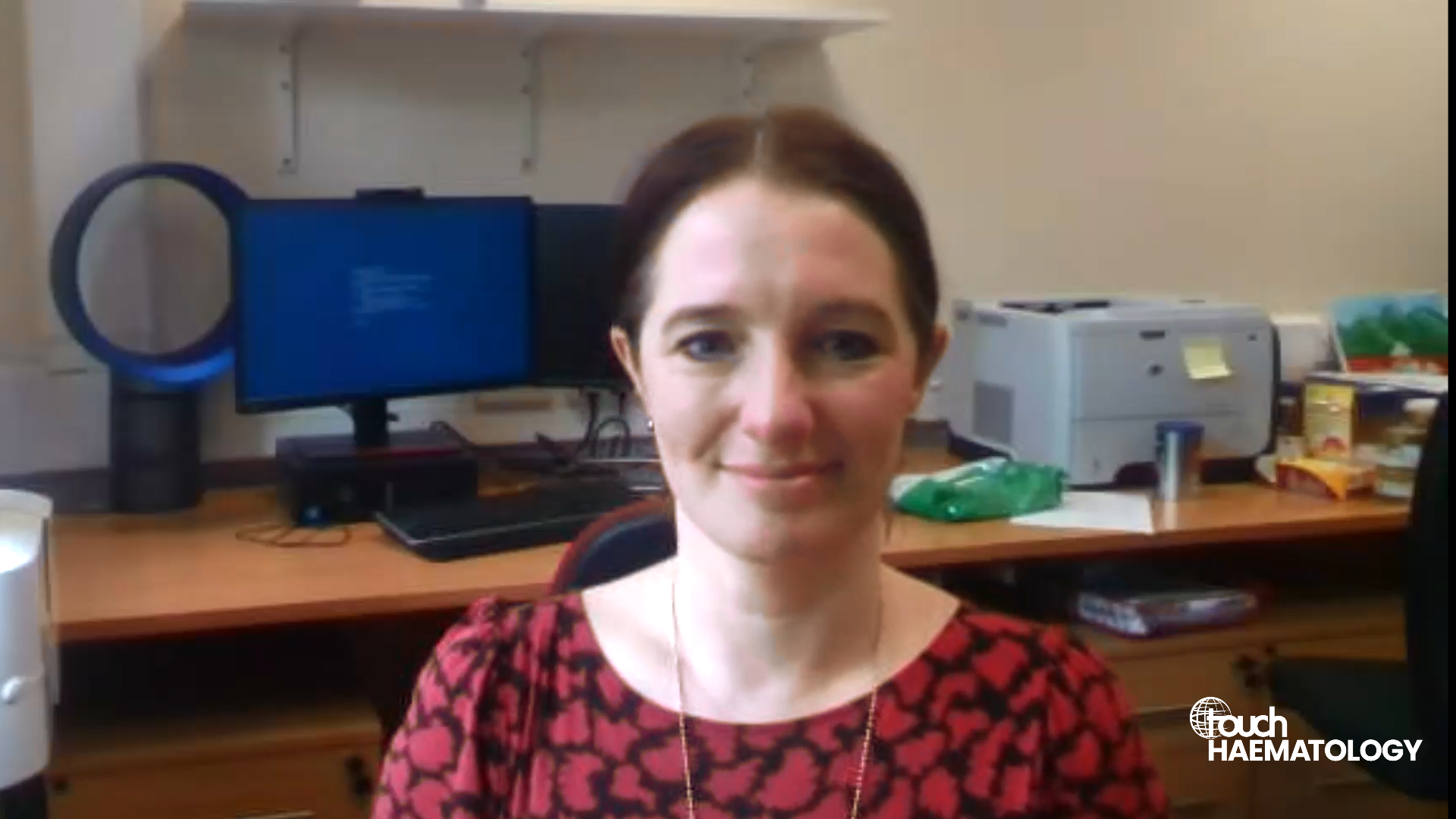
At the European Hematology Association (EHA) 2026 Congress, Dr Amer Zeidan (Yale Cancer Center, New Haven, CT, USA) presented updated long-term results from the intensive induction cohort of KOMET-007, evaluating ziftomenib 600 mg in combination with 7+3 in newly diagnosed NPM1-mutated and KMT2A-rearranged AML. The combination demonstrated high composite complete remission rates (96% and 90%, respectively), deep measurable residual disease negativity, and a manageable safety profile, supporting the continued development of menin inhibition in frontline AML.
In the following Q&A, Dr Zeidan discusses the biological rationale for menin inhibition, the ongoing unmet need in NPM1-mutated AML, and the potential of KOMET-007 to reshape frontline treatment strategies.
Could you outline the biological rationale for menin inhibition in AML and the rationale for incorporating ziftomenib into combination regimens?
Ziftomenib is one of two menin inhibitors currently approved in the USA, alongside revumenib, with several additional agents in clinical development. These compounds were rationally designed to disrupt the menin–KMT2A interaction, which plays a critical role in leukemogenesis through dysregulated transcriptional activation of downstream targets such as HOXA9 and MEIS1. Preclinical data have demonstrated that inhibition of this pathway promotes leukemic differentiation and apoptosis, providing a strong mechanistic basis for therapeutic targeting.
Clinically, this activity has been validated in early-phase monotherapy studies in relapsed/refractory acute myeloid leukemia (AML), particularly in molecularly defined subsets such as NPM1-mutated and KMT2A-rearranged disease, where dependency on this transcriptional programme appears most pronounced. Building on these data, the logical next step has been to evaluate ziftomenib in combination with established backbone therapies, including intensive induction with 7+3 and lower-intensity regimens such as azacitidine plus venetoclax, with the objective of improving depth and durability of response.
NPM1-mutated AML is often classified as favorable risk. Why does a significant unmet need remain?
While NPM1-mutated AML is categorized as favorable risk within current ELN frameworks, that designation is inherently relative. Long-term remission and cure rates remain in the range of 50–60%, which is clearly superior to adverse-risk AML, but still leaves a substantial proportion of patients relapsing and ultimately succumbing to their disease.
From both a clinical and patient-centred perspective, that remains far from satisfactory. The key unmet need is to meaningfully improve cure rates, particularly in higher-risk subsets within this molecular category, including older patients, those with co-existing adverse cytogenetic features, and those with relapsed or refractory disease. As we have seen historically in acute promyelocytic leukemia, substantial improvements in survival are achievable when biologically targeted approaches are effectively integrated into frontline therapy.
What is the rationale for moving menin inhibitors earlier in the treatment paradigm?
Although menin inhibitors have demonstrated clinically meaningful activity in relapsed/refractory AML, their efficacy in this setting remains limited by durability. Composite complete remission rates are approximately 25%, with median response durations of around six months and median overall survival typically in the range of six to eight months.
This mirrors the developmental trajectory of multiple targeted therapies in AML, where activity in the salvage setting serves as proof of concept, but maximal clinical benefit is realised when these agents are introduced upfront. The hypothesis is that earlier integration may improve measurable residual disease (MRD) clearance, reduce relapse risk, and ultimately increase cure rates.
How might KOMET-007 influence future treatment paradigms if positive?
The phase 1 KOMET-001 study established the feasibility of combining ziftomenib with intensive induction, demonstrating a manageable safety profile without additive myelosuppression, a low incidence of severe differentiation syndrome or QTc prolongation, and encouraging remission durability and survival outcomes.
KOMET-007 is designed as a registrational programme and incorporates both intensive and non-intensive treatment pathways. Fit patients are randomised to 7+3 with or without ziftomenib, while unfit patients receive azacitidine-venetoclax with or without ziftomenib.
Importantly, the trial incorporates clinically meaningful proximal endpoints, including MRD-negative complete remission in the intensive cohort, which may facilitate accelerated regulatory pathways. If positive, KOMET-007 has the potential to redefine the frontline management of NPM1-mutated and KMT2A-rearranged AML, while further establishing menin inhibition as a central therapeutic strategy in molecularly stratified AML.
References
- Abstract EHA-3970: Zeidan AM, Wang E, Erba H, et al. ZIFTOMENIB COMBINED WITH INTENSIVE INDUCTION (7+3) FOR NEWLY DIAGNOSED NPM1‑M OR KMT2A-R ACUTE MYELOID LEUKEMIA (AML): LONG-TERM RESULTS FROM THE KOMET-007 TRIAL. Presented at: EHA 2026, Stockholm, Sweden. June 11–14th, 2026.
- Abstract EHA-4060: Zeidan AM, Wang E, Dillon R, et al. REGISTRATIONAL PHASE 3 STUDIES OF ZIFTOMENIB IN COMBINATION WITH NONINTENSIVE OR INTENSIVE CHEMOTHERAPY FOR NEWLY DIAGNOSED NPM1‑M OR KMT2A-R ACUTE MYELOID LEUKEMIA (AML): THE KOMET-017 TRIAL. Presented at: EHA 2026, Stockholm, Sweden. June 11–14th, 2026.
This content has been developed independently by Touch Medical Media for touchHEMATOLOGY. Views expressed are the speaker’s own and do not necessarily reflect the views of Touch Medical Media. This article was created by the editorial team utilizing AI as an editorial tool (ChatGPT 5.5 [Large language model]. https://chat.openai.com/chat.) The content was developed and edited by human editors. No funding was received in the publication of this article.
Disclosures: Amer Zeidan is a consultant for, member of the Advisory Board for and received honoraria/honorarium from Kura and Kyowa.
Cite: KOMET-007 reinforces frontline potential of ziftomenib in NPM1-mutated and KMT2A-rearranged AML. touchHEMATOLOGY. 24th June 2026.
Don’t miss out on hearing about our latest peer-reviewed articles, expert opinions, conference news, podcasts, and more.